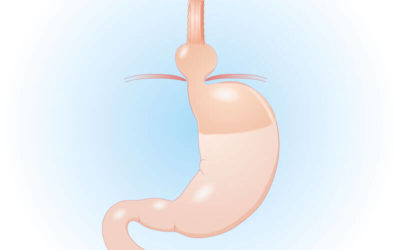
Reflux disease is most commonly caused by a mechanical weakness at the junction between the esophagus and the stomach. A key underlying factor is a congenital or acquired weakness of the connective tissue.
As a result, the natural barrier between the esophagus and the stomach loses its integrity. In many cases, this is associated with a hiatal hernia, in which part of the stomach moves through an enlarged opening in the diaphragm into the chest cavity. This alters the pressure dynamics at the gastroesophageal junction and facilitates the backflow of gastric contents into the esophagus.
Importantly, a hiatal hernia is not a prerequisite for reflux disease. Some individuals may have even larger hernias with only minimal symptoms, whereas others experience significant symptoms without any detectable hernia.
A generalized connective tissue weakness may also be evident in other parts of the body, for example in the form of varicose veins, hemorrhoids, or inguinal hernias. These findings are often observed within families.
There is not always a clear correlation between subjective symptoms and objective findings. Significant esophageal inflammation may be present with only minor symptoms, while conversely, patients may experience pronounced symptoms without any visible inflammatory changes on endoscopy. The absence of symptoms, or only mild symptoms, therefore does not exclude clinically relevant reflux disease.
Acid regurgitation and a burning sensation behind the breastbone (sternum) are typically the result of an insufficient barrier between the esophagus and the stomach, allowing gastric acid to reflux into the esophagus.
Mischa Feigel, MD
Symptoms of Reflux Disease
Heartburn
Typical symptoms include acid regurgitation (heartburn) as well as a burning or pressure-like sensation behind the breastbone. Symptoms often worsen when lying down or after large meals.
Regurgitation and Volume Reflux
In some patients, gastric contents—consisting of fluid, food particles, and acid—may reflux as far as the throat or mouth.
A distinction is made between regurgitation and volume reflux.
Regurgitation refers to the backflow of typically acidic gastric contents into the mouth or throat.
Volume reflux refers to the return of larger amounts of fluid or food. In this situation, the primary issue is not the acidity, but the actual volume of gastric contents refluxing upward.
This phenomenon occurs particularly when lying down or during sleep at night. It may also occur when bending forward—for example when tying shoes, especially after eating—leading to a sensation of pressure behind the breastbone and reflux.
In more advanced cases, gastric contents may enter the airways. This is referred to as aspiration and may result in coughing episodes or recurrent irritation of the respiratory tract, including pneumonia.
It is important to note that medications reduce gastric acid production but do not prevent the mechanical backflow of gastric contents.
Silent Reflux
Silent reflux, also referred to as laryngopharyngeal reflux, should be distinguished from classic heartburn. In this form, symptoms are predominantly localized to the throat and may include frequent throat clearing, hoarseness, a sensation of a lump in the throat, increased swallowing, or a persistent acidic sensation in the mouth and throat.
Some patients experience only these symptoms without ever developing typical heartburn.
Certain foods and beverages—particularly fatty meals, sweets, fruit juices, and alcoholic drinks—can increase gastric acid production and temporarily worsen symptoms. Treatment with proton pump inhibitors reliably reduces baseline gastric acid production. However, it does not address the underlying mechanical cause and cannot fully prevent transient increases in acid exposure.
Examples include:
French fries, chips, nuts, chocolate;
fatty meats;
alcohol; coffee; carbonated beverages;
spicy or very sweet foods.
Prevalence of Reflux Disease
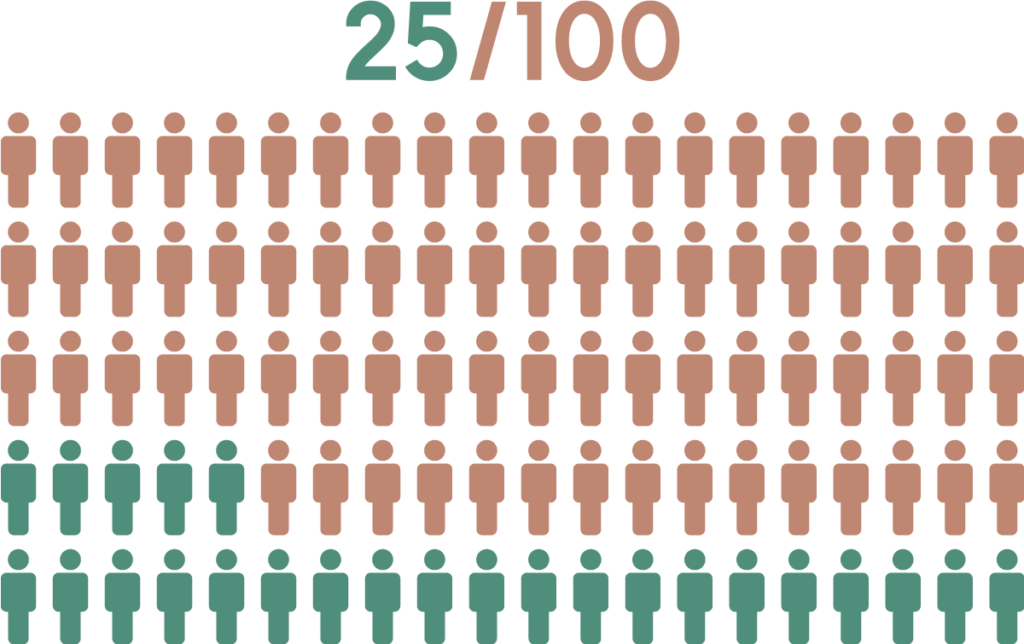
Reflux disease is the most common benign disorder of the upper gastrointestinal tract in the Western world. Up to 25% of the population experience typical reflux symptoms to varying degrees. Approximately one third of affected individuals seek medical attention for these complaints.
Potential Long-Term Consequences of Reflux Disease
If reflux disease persists over time, changes in the esophageal lining may occur, resulting in Barrett’s esophagus.
This condition is not malignant, but in rare cases may progress to esophageal cancer. The need for endoscopic surveillance depends on the extent of Barrett’s mucosa and is determined individually.